Complete the Job with Professional Installation
Buying the plants is half the job. Our crew plants at the proper depth and spacing so your edge fills in evenly and holds its line long term.
Get Professional Installation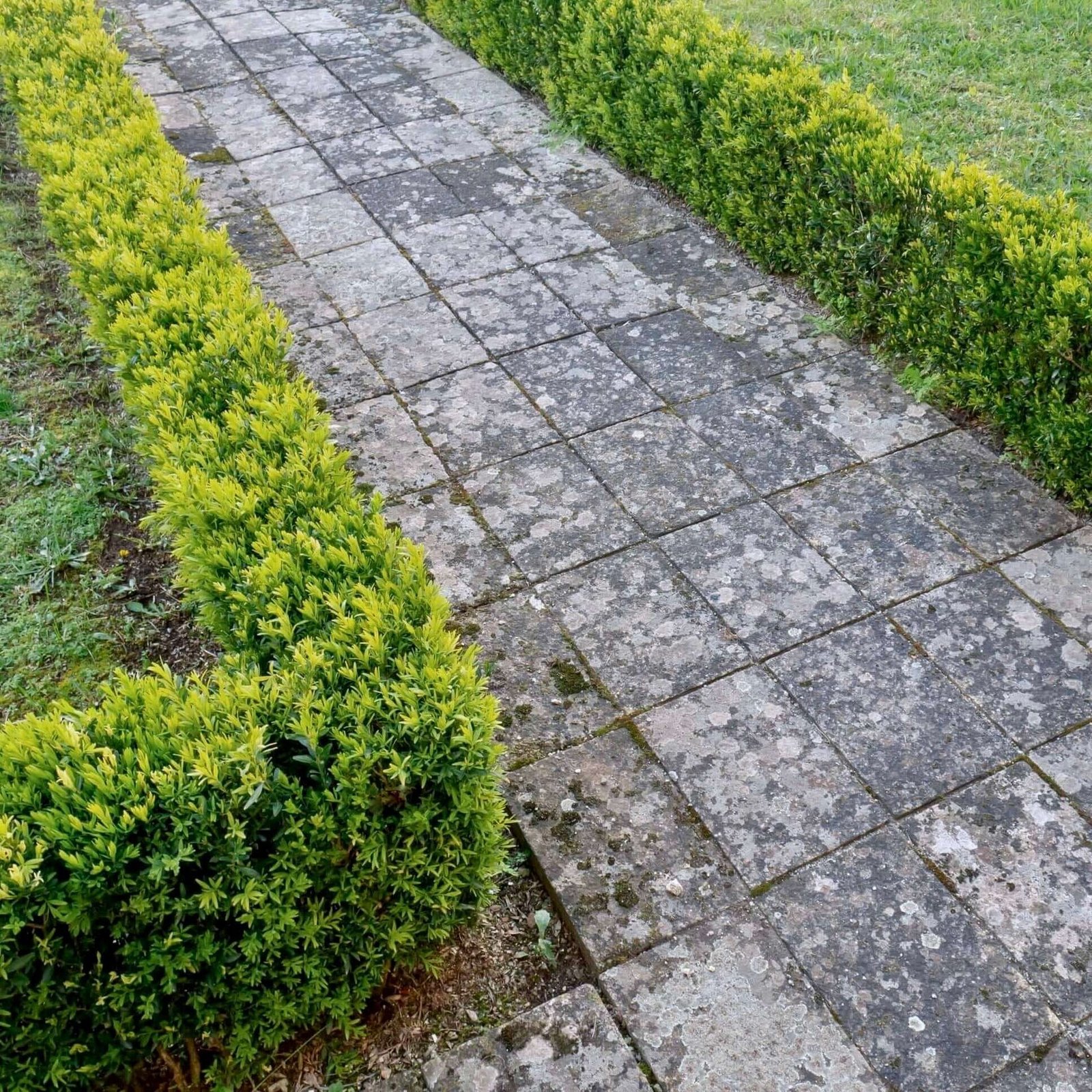 1/4
1/4The tight, compact evergreen shrub for crisp formal edging and detailed border work. Dwarf English Boxwood grows slower and stays smaller than Japanese Boxwood, holding a dense, refined shape with minimal shearing.
Pricing is confirmed at quote based on size, quantity, and delivery distance.
Request a Custom QuoteDwarf English Boxwood is the tightest, most compact boxwood we grow, prized for crisp, low, formal edges along walkways and garden beds. It grows slower than Japanese Boxwood and stays smaller, so it holds a refined shape with less frequent shearing.
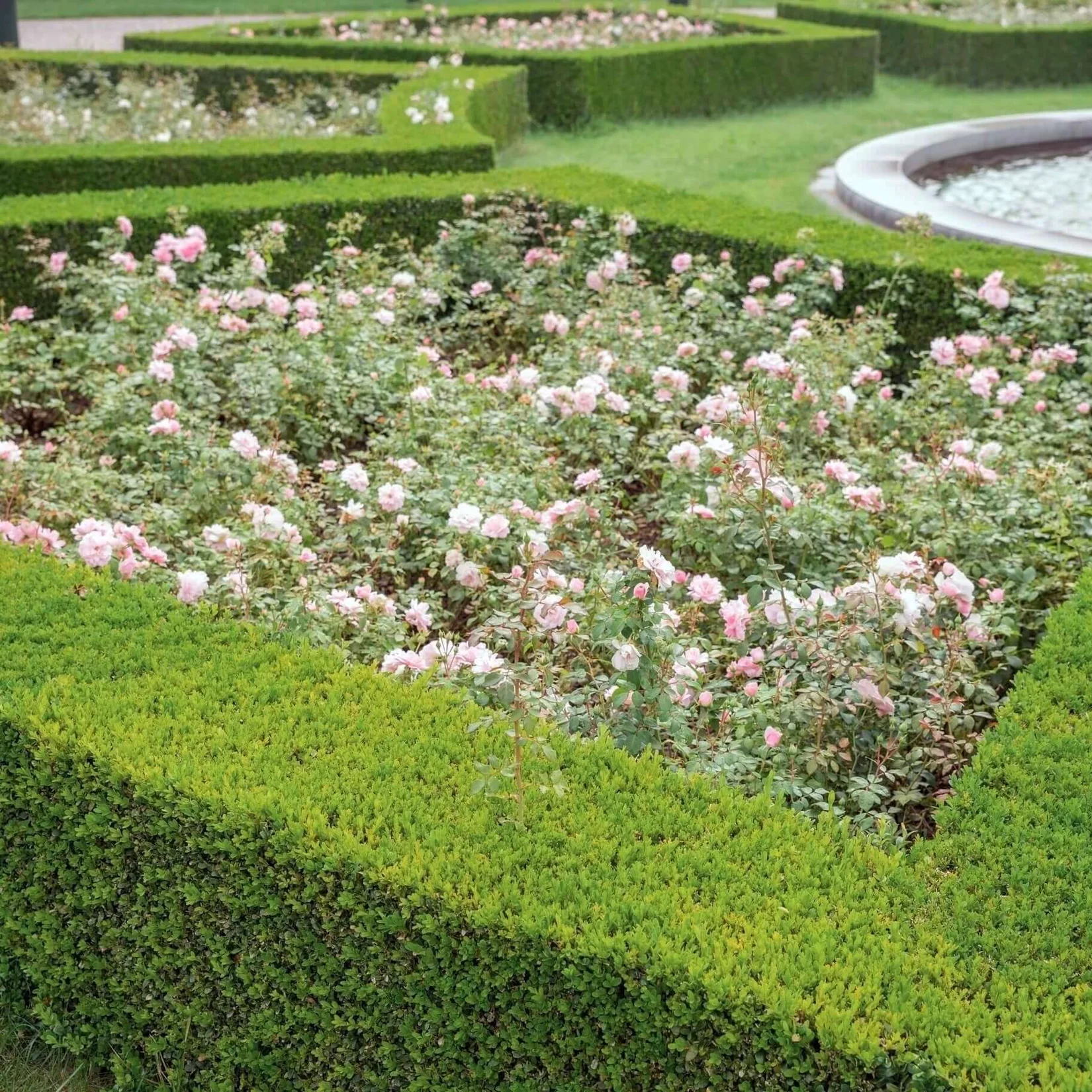
If you landed here instead of Japanese Boxwood, here's the quick distinction: Dwarf English is the smaller, slower, tighter option, best for a low formal edge that stays compact for years. If you want a taller border or hedge that fills in faster, Japanese Boxwood is the better fit.
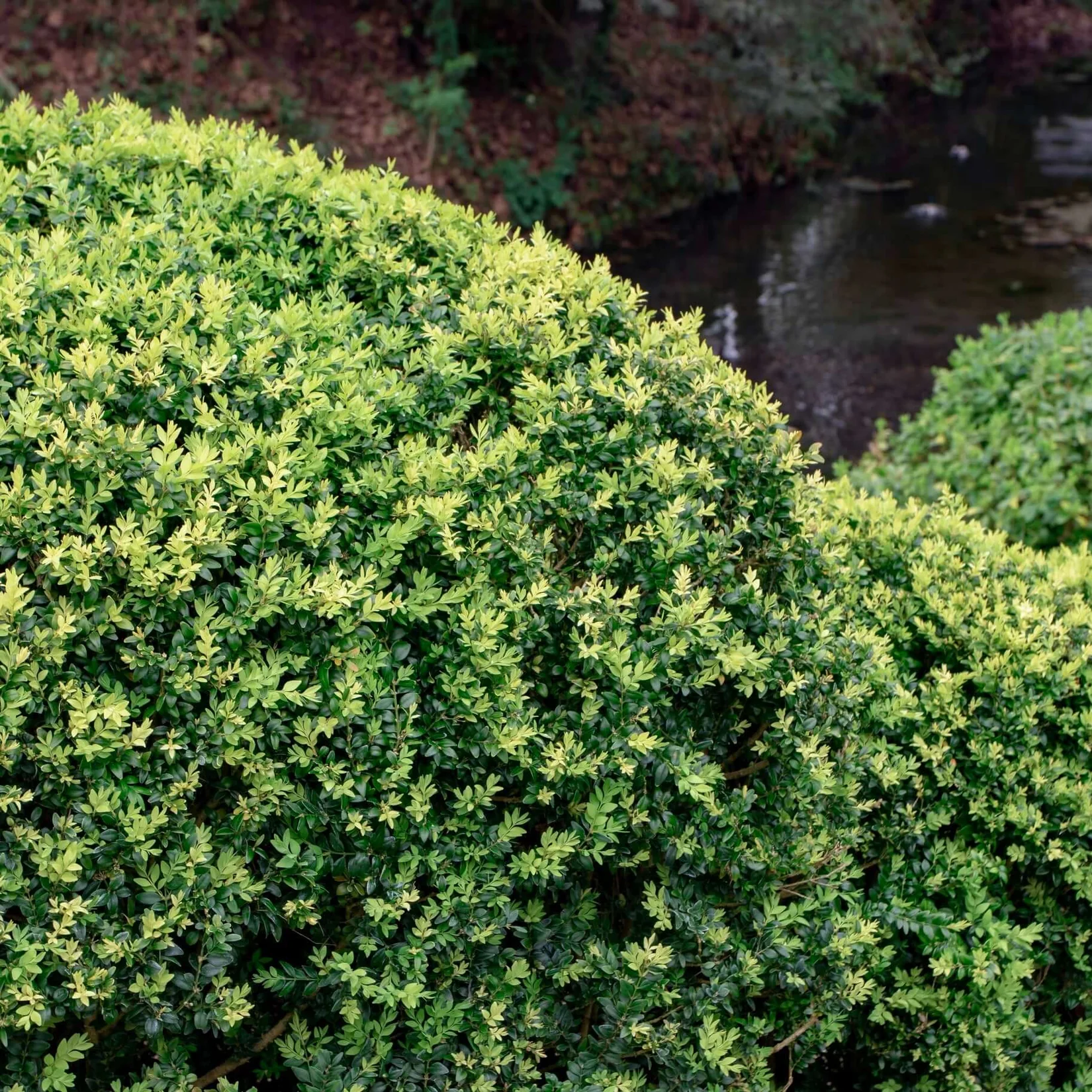
For a tight, continuous edge, we typically plant Dwarf English Boxwood 8 to 12 inches apart, center to center, closer than Japanese Boxwood since it stays more compact. Growth is slow, expect roughly 3 to 6 inches of new growth per year once established, so patience pays off with a refined, low-maintenance edge.
Buying the plants is half the job. Our crew plants at the proper depth and spacing so your edge fills in evenly and holds its line long term.
Get Professional InstallationSoil amendments and slow-release fertilizer suited to evergreen shrubs.
Ask About Add-onsWe are a working grower, not a re-seller. Contractors get direct-from-grower pricing, bulk quantities, and coordinated delivery to the job site.
See Wholesale PricingMost customers maintain it at 1 to 2 feet as a clipped edge. It's naturally compact, even left unclipped it stays smaller than Japanese Boxwood.
Dwarf English is smaller, slower, and tighter, best for a low formal edge. Japanese Boxwood grows faster and larger, better for a taller border or hedge.
Full sun to partial shade works well in Southern California, though some afternoon shade can help in the hottest inland areas.
For a tight formal edge, plan on shearing two to three times a year. It naturally holds a compact, rounded form even with less frequent shearing.
For a tight, continuous edge, we typically recommend 8 to 12 inches apart, center to center.